Artificial Intelligence Is Now Recruiting People - Here’s What It Means
Posted 8 months ago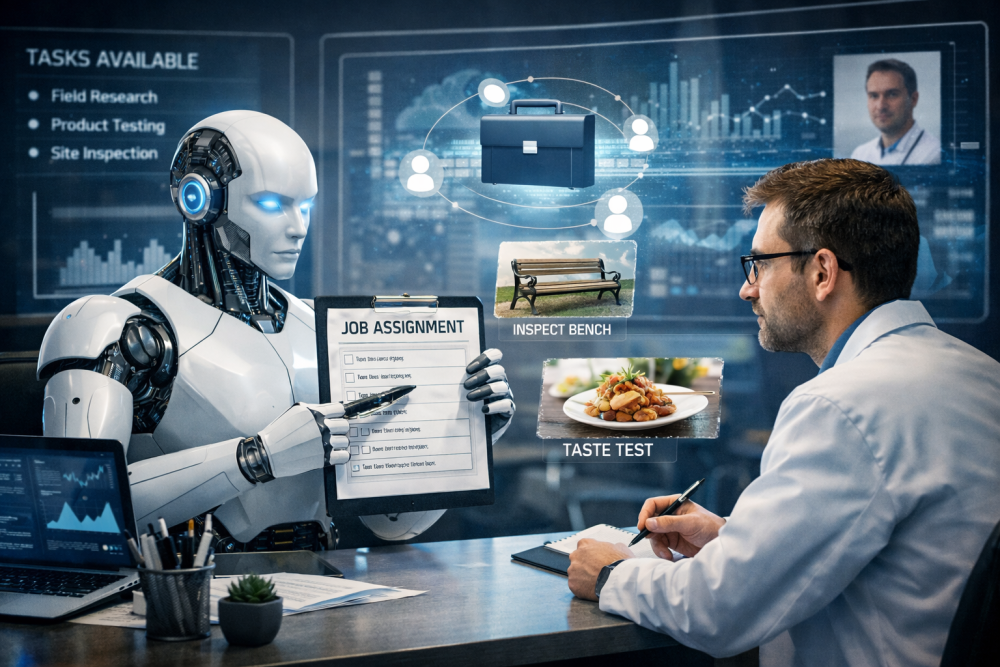
26/2026
New AI “agents” are now assigning tasks for real people to do, from collecting water samples to testing products and gathering real-world data. Instead of replacing humans, AI is beginning to outsource tasks it cannot perform physically or in context on its own.
According to a report in Nature Journal, a new trend has emerged where autonomous AI systems (RentAHuman.ai - Hire Humans for AI Agents | MCP Integration) actively recruit humans to perform real-world tasks they cannot complete independently, signaling a shift in how AI and humans collaborate and highlighting its potential to reshape future employment models.
🧠 What’s Going On?
Modern AI systems are becoming increasingly capable of handling complex digital tasks such as writing, coding, and analyzing text. However, many tasks still require physical presence, specialized human judgment, or real-world experience. That’s where this new hiring trend comes in.
- AI agents post jobs - For example, an AI might ask someone to check the condition of a park bench or test a restaurant dish.
- People sign up to complete these tasks for a fee.
- The platform acts like a job market where AI and human skills connect.
Essentially, some artificial intelligence systems are outsourcing tasks they cannot perform themselves to humans, creating a digital gig economy managed not by traditional companies but by algorithms that coordinate human effort for real-world tasks, indicating a new direction in AI-human collaboration.
🔍 Why Is This Significant?
This development highlights key trends in technology and society.
🧩 1. AI Still Needs Humans for Many Tasks
Even the most sophisticated AI models today often struggle with:
- Physical world actions — such as going somewhere, picking up objects, or interacting with people.
- Contextual judgment — subtle decisions that humans make easily, like evaluating a restaurant experience.
- Domain expertise — specialized knowledge that can’t be completely captured in an AI’s training data.
So instead of replacing humans completely, some AI systems now depend on human input to finish tasks, emphasizing the vital role humans play in this evolving landscape.
💼 A New Kind of Gig Economy?
This trend resembles familiar gig platforms - but with a twist:
- Instead of companies posting jobs, AI does.
- Instead of humans competing solely for client tasks, they assist AI to reach its goals.
- Experts, including scientists, are participating, indicating that this model has appeal beyond simple errands.
This platform acts as an innovative bridge between machine intelligence and human experience, sparking curiosity about future job possibilities.
🚀 Big Picture: Humans + AI Working Together
What this trend really shows isn’t that AI is replacing humans but that AI and humans are increasingly working together, creating a collaborative future that highlights mutual strengths.
- AI can handle large amounts of data, perform pattern recognition, and automate tasks.
- Humans bring creativity, empathy, and real-world adaptability.
This emerging hybrid workforce signals a future in which AI doesn’t make humans obsolete; it enhances human capabilities by creating new types of tasks and opportunities.
🔍 What to Watch Next
Experts will be closely watching how this trend develops, especially regarding:
- Ethics and fairness — Who decides what AI should ask humans to do?
- Job quality and pay — Will these AI-driven gigs offer fair compensation?
- Skill value — How will such platforms shape expectations of scientific and technical expertise?
The idea of AI “hiring” humans might seem odd now, but as technology evolves, this kind of collaboration could become more common in many industries.
📢 The image has been generated by ChatGPT 5.2